Fairhaven Sermon 2-1-2026
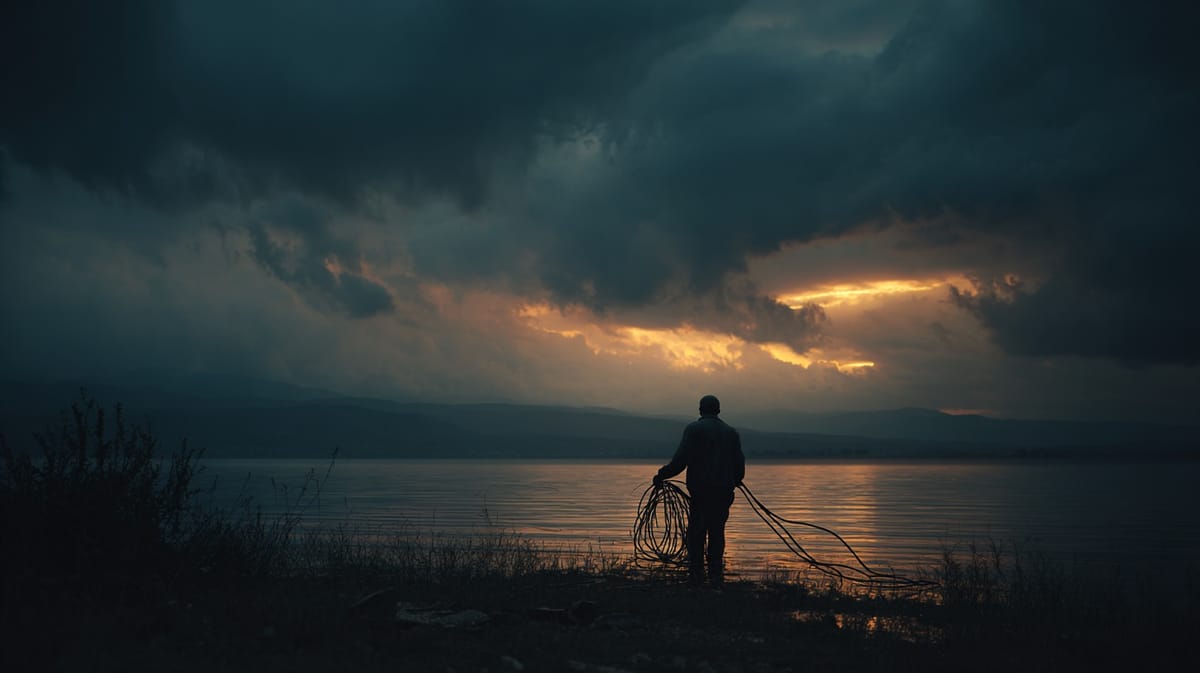
n this week’s service, Rev. Dylan Parson explored the biblical story of Jesus calling his first disciples, drawing a powerful contrast between the idyllic imagery of a peaceful seashore and the harsh realities of life in Galilee under Roman occupation. He emphasized that the fishermen weren't enjoying a leisurely outing but were engaged in difficult labor, facing economic hardship and a pervasive sense of oppression. Parson used this context to highlight the profound nature of Jesus’ invitation – a call not to simply apologize for shortcomings, but to radically transform one's life and embrace a new direction, moving beyond a predictable and often bleak existence.
Parson challenged the congregation to consider why these fishermen, without witnessing miracles or hearing Jesus’ message, would abandon their livelihoods and families to follow him. He suggested they were drawn to the promise of something fundamentally different—a glimmer of hope and the possibility of a transformed life, a light piercing through the shadows of their world. The pastor concluded by urging listeners to consider their own “nets” – the routines and securities that might be holding them back—and to be open to the radical change and unknown journey that following Jesus might entail.
Transcript
The Prophet Isaiah's words feel especially heavy, visceral for us during a western Pennsylvania winter, I think. You know, we're living in a pitch-dark land, right? I feel like we're home for two hours after this before we're in pitch darkness. We get just a few hours of clear sky a week. Christmas cheer, the busyness of the season, the high points of winter, unfortunately front-loaded, have completely faded at this point.
We're in the long part of winter, the intractable piece, where it feels like the sun just barely gets over the horizon and then drops back down. So it might feel a little bit disconnected to hear Matthew's gospel text this morning that takes place on the beach. You can picture the image of Jesus and these first disciples. Some date palms swaying, the light pebbly sand, the water gently lapping on the shore against the tied up boats.
You've got the sunrise. James and John are just silhouettes against the morning sky. Yeah. And this is this really appealing image.
Almost feels like a tropical paradise, very different than what we have right now. And we can envision the sounds of these men sloshing through the surf, boats slicing through the waves, these four future disciples throwing their nets on a peaceful morning. I think that's a mistaken image, at least an incomplete image. Because we picture fishermen in our context as doing something for fun.
It's leisure. We picture them going out to relax on the water while the rest of the world is asleep. But these are men at work. This is their job site, these fishermen.
And they're doing this work to provide for their families. They're commercial fishermen. So forget the palm trees and the sea spray. Drop the idea that anybody's on a casual stroll on the beach to watch the sun come up.
These guys are at work. Five in the morning on the job. And envision what that's really like. There's a cold wind.
You can't escape the smell of seaweed and wet wood mixed with the smell of dying tilapia flopping in the boat. And every man's hands out there are chafed and blistery from throwing ropes over and over and over again. No. And this is, as Isaiah puts it, a land of deep shadow.
And so envision what that's really like. The people of Galilee are an occupied people. They're just keeping their heads down. They're trying to make a living under the boot of the Roman Empire that just marches violently and carelessly through their cities.
There's massacres all the time. The king's a tyrant. This is a shadow over the land that isn't just emotional, isn't just spiritual. It's killing people.
It's creating orphans. And maybe we can feel that shadow in our land, in our world. Right? And so all this said, this is not a leisurely day on the lake. This is not like going to Presque Isle.
It's not like going to North Park Lake. This is hard labor in a hard place. And that's where Jesus shows up to meet the disciples. Not the synagogue, not the temple, not the market square.
He goes and sees them at work. And so we meet Jesus this morning, walking through all this bustle on the lakeshore, all of this mourning work. And he has just returned from his 40-day temptation in the desert, which we get back to in Lent, strangely. But the Holy Spirit had sent him out immediately after his baptism by John in the Jordan, and he's tempted in the desert for 40 days.
And after this great trial, he's proven his ability to resist Satan at all costs, but And so he chooses now to begin his ministry in the world. So he moves away from his hometown of Nazareth because the prophets never heard in his hometown, right? And he decides he's going to begin a new chapter in the lakeside town of Capernaum. And so that's where we are today. And what's happening here is the very beginning of Jesus' ministry.
He transitions from being this Nazarene carpenter to a preacher across the region of Galilee. And he's no longer the guy that he was in his hometown. One chapter has closed, a new chapter has begun, and he's no longer the guy that he was in his hometown. And the time has started for something new.
And he has this simple message that he proclaims everywhere that he goes, and he says, Repent. The kingdom of heaven has come near. A better translation, the one you heard Flo read from the CEB this morning, is, Change your hearts and lives. Here comes the kingdom of heaven.
And Jesus' message is clear: God is doing something right now. And He's doing it here, He's doing it among you, He's doing it in this place. Amen. This isn't just a far-off, abstract prediction.
So shape up or face the consequences. And this is why I think the change your hearts and lives language is so much better than repent. We understand repentance to be like apologizing. But repentance is, there's a word metanoia in Greek, which is not about apology.
It's not even a call to recognize, to name the sins you've committed. It means turn around. It means to become radically different than how you were, to go in a different direction. So don't just fiddle on the edge of things.
Don't just apologize for what you've done. Change your life. Change who you are completely. And so this is the message that Jesus has started proclaiming.
We don't know how long he's been doing this at this point, but he's still a really minor character on the Galilean landscape. You know, just like Pittsburgh, they have preachers that wander around on the street corners. Jesus is still just one of those people. But we meet him this morning, walking along the Sea of Galilee as a new chapter begins.
So first he sees Simon, Peter, and Andrew, and they're fishing from the shoreline. They're casting their nets into the choppy sea. And he says, come, follow me, and I will show you how to fish for people. And they drop their nets immediately.
These tools that have been their livelihood for the entirety of their adult lives, Amen. and probably before that, they drop their nets and they go immediately. They follow Jesus up the beach. And now these guys are a group of three, Jesus and these other two, and they continue along the shoreline.
And soon they spot James and John, and they're not on the shoreline. They're out on their father's boat a couple yards out into the sea. And again, Jesus calls out to them, follow me. And they're out on the shoreline.
That's it. And he doesn't try to pitch them on anything. He doesn't give them a plan or a job opportunity. He doesn't promise them the secrets of the universe.
But still, they just respond to this simple invitation. And they drop their nets. They climb out of the boat. They wade to shore.
And they set out on this journey to somewhere with this guy. And without so much as a see-you-later to their own dad, he just stands bewildered in Okay. the boat, what's he going to do now? What are they going to do now? Nobody knows but Jesus, but they've decided to go. And I think the most glaring question that grips any of us as we read this story is a really basic one, and that is, why did they go? because at least as Matthew tells it, they've not seen a miracle.
Why? They've not seen any kind of wondrous sign. They've not even heard Jesus preach. They've not interviewed Jesus to see what he's got in mind. And they're not like John the Baptist.
These guys are fishermen. They've not been actively waiting for the Messiah, pouring over prophecy, seeing if he's going to show up. And yet without a moment's thought, without a moment of debate, they just leave behind everything. No, they're not.
Their family, their friends, the livelihood that keeps food on their tables, a roof over their heads. They drop it and follow this man they've never met. Why would they do that? Why would they do that? Well, Matthew tells us that the Jesus ministry as he moves away from Nazareth into Capernaum, which is this land of Zebulun and Naphtali on a road by the sea, the same place that Isaiah talked about, he says that this is a fulfillment of prophecy. And Matthew tells us that the people in this very land live in the dark.
And Jesus' arrival marks the coming of this brilliant light that just shines upon everybody there, that slices through this shadow of death that they lived in. And I don't think that these fishermen knew Isaiah's prophecy by heart. They did not have all this stuff memorized. They were not looking for the Messiah.
They didn't see Jesus and go, aha, just like Isaiah chapter 9, that's the guy. They didn't do that. But I think they did feel something shift when they saw Jesus. They felt this disruption.
life under the Roman Empire, well, really in any empire, is just painfully predictable. Right? With a few exceptions, there aren't many. You know your place in the world. You know your fate.
And these four fishermen, they know what each passing day is going to bring for them. They're going to fish. They're going to eat. They're going to sleep.
They're going to wake up and do it again. And a couple times a year, they're going to pay their taxes. Repeat. Repeat.
From adolescence to old age when they can't do it anymore, their life is going to look the same every day. And their fathers pass this life on to them. They'll pass it on to their sons. There's nowhere to go.
It's a closed cycle. It's a limited horizon. And the shadow that hangs over them and over their land is not just this darkness of oppression and occupation. It is that.
But there's this deep spiritual stagnation too. There's this feeling that this life that they have, that's all there is. Nothing really ever changes. That's it.
And Jesus, when he arrives on the lakeshore here... offers this straightforward call that they come and follow him, that disrupts that stagnation.
This is something completely different. They've never seen anything like this before. Come and follow me, he says, and I will show you how to fish for people. What does that mean? They just sit there wondering, what does that mean? But it doesn't matter.
It doesn't matter what it means. They don't figure it out. Their feet are already moving. It was compelling.
They've already dropped their nets. Jesus says, I will show you how to fish for people, and this would mark a transformation for them in their lives. Okay. It marks a transformation in what they do, and it marks a transformation in who they are.
It is this metanoia, this changing your hearts and lives that Jesus has been proclaiming. It's them doing it. They have this opportunity, this offering for a radical and complete change in their lives. No one else was offering that.
And they follow Jesus because he offers them this really captivating mystery, an unknown future that lies in this possibility. They can become something new. And that's more compelling to them, more captivating than the security of just staying the same day in, day out, nothing to look forward to. This is what life is.
the mystery of something different is more compelling than staying the same. And so I wonder, is that true for you? What would you prefer? The security of staying the same or the mystery of something different with Jesus? Because who knows? Think about this. Jesus might have walked past a dozen other boats before he got to Peter and Andrew. He might have called out to some other fishermen who looked up, thought about it, and looked back down, pretended they didn't hear Jesus or just waved him off.
Right? It's safer in that shadow than getting into the light. But we, I think, have a instinctive understanding of this, don't we, about living in shadow. We know what that's like. About a life that's a closed cycle where we just keep doing the same thing over and over again.
There's nothing on the horizon. And that's not just the deep freeze that kept us in our house the past week, switching from one pair of sweatpants to the next day's pair of sweatpants. This is a spiritual climate thing. It's a spiritual thing.
It's what our world feels like, what our souls often feel like. We have our nets that we take care of day in and day out. We try to hold things together. We try to survive.
We get nearsighted. And like some of these other fishermen probably, we stare so hard at these nets we're mending in our hands, the bills, the schedules, the family stuff, the worries that we have. We miss that Jesus is over here waving at us from the shore saying, come, I have something else for you. And as we're bogged down in all this stagnant routine, we can easily forget that life is supposed to be something else, something more than this.
We stop believing that we were made for anything besides just keeping that boat floating. But there's Jesus on the shore, shining like this light in the darkness that's gotten dangerously comfortable for us, this darkness. And he's issuing an invitation to you. But of course, you can decide to keep your head down if you want.
But whenever he calls this first set of disciples, notice how he does it. He doesn't hand them a set of instructions. He doesn't give them a printed copy of the Beatitudes to memorize. He doesn't give Simon and Andrew one of those little comic book tracks to hand out to people about the good news of Jesus as part of this fishing thing.
He doesn't say, go and convince people. He says, follow me and I'll show you how to fish for people. And he is inviting them to undergo this transformation. He's inviting them to this turning towards something mysterious and new.
They were once in the shadow and now they're invited to radiate his light into the world. And I think this is what we often miss anytime we talk about evangelism, which isn't very often. We think that evangelism is handing out these little packets or saying the right thing to people to convince them to try Jesus. Right? We think it's this task where we have to drag people to church and hope that they stay.
But in this story, we see here that fishing isn't a chore that they're assigned, that they have to do. It's a result of change that starts inside of them. Jesus is saying, come with me and I will change you so radically. I'll give you all of this light that you won't be able to help but shine that on to people.
And it will catch them the way that my light caught you. And the invitation here from Jesus is not to become like a salesperson for God. The invitation is to become living proof that there's more than the drudgery of the life that we have in the shadows, where nothing, where nobody could ever be any different than they are already. And think about what that means for us.
To accept that Jesus gives us this invitation means refusing to accept that just stagnation Amen. is the final word, that sameness is how things are going to be. It means refusing to believe that our lives, this church, this community, this country are finished growing. And it means dropping these heavy nets that we cling to, the nets that mean this is just how things are, this is what we do, this is how we're always going to do it, and instead step towards the light that has shown up.
Right? And it's choosing to know that God wants more for you personally than what this world can give you, what you can achieve on your own. And whenever we allow ourselves to be changed like that, to be turned by this mystery, we start to have that light. We don't have to sell Jesus to people because our lives become that gospel. That's how a net works.
It just catches what's around. It doesn't persuade each fish to come jump in the net. People are drawn to the light. People are drawn to hope.
People are drawn to those who live like they've seen something big that has changed their world. People notice that. They get caught in it. They get caught up in it.
They see it. They want to know. And so the question for us on this cold day is not, you know, who can we recruit? That's not evangelism. The question is deeper.
The question is scarier. Are we willing to get out of the boat, the place that's been safe, that's been familiar for decades, whatever that means for you? Are you willing to let go of routine, the safety of knowing exactly how tomorrow's going to go forever in exchange for this unknown journey that Jesus could call you to do something totally different tomorrow? Are you willing to let Jesus change your heart, your life so completely that you become a different kind of person? Yeah. Because that's the choice that Andrew and Simon face. That's the choice that James and John face.
They look at their father. They look at the boat. They look at these endless days of a predictable future. And then they look at Jesus.
And they realize that one of these paths is safe. They know it. They like it. But the other path is alive.
dangerous, maybe, but alive. And these everyday fishermen become fishers of people. They travel places they never could have imagined. They proclaim good news.
Right? They heal disease. They cast out demons. They even face down death itself and win. Jesus calls you not just to go with him, but to become something different because you have gone with him.
Your net is in your hands right now. We've all got our nets. Maybe your grip's tightened on that net as you've heard this story. but Jesus stands on the beach.
He calls you. Will you drop that net and follow him wherever he goes? In the name of the Father and the Son and the Holy Spirit. Amen.