Fairhaven Easter Sunday 2026
Summary
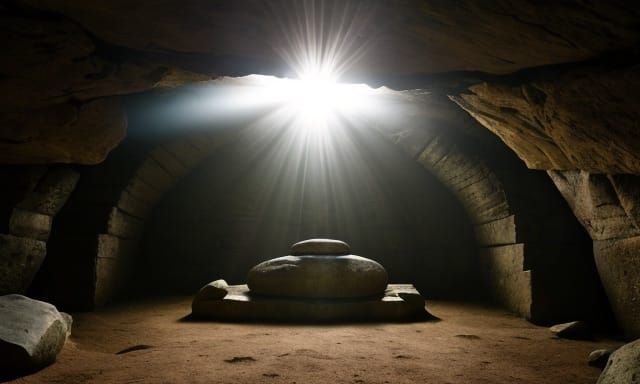
In this week’s service, Rev. Dylan Parson reflected on the Gospel of Matthew, focusing on the powerful and unexpected events of Easter morning. Drawing from the account of the two Marys visiting the tomb, Parson highlighted the contrast between the women's faithful presence and the preoccupation of the Roman authorities with guarding a corpse. He noted that the angel’s act of rolling away the stone was not intended to release Jesus from the grave, but rather to allow the women to witness the reality of the empty tomb and the profound power of the resurrection.
Moving beyond the historical narrative, Parson challenged the congregation to move past "spiritual muscle memory" and the hollow performance of religious tradition. He cautioned against approaching faith merely as a duty—bringing "spices" to honor a dead memory—and instead encouraged a vibrant, personal encounter with the risen Christ. Ultimately, he invited listeners to consider the "tombs" in their own lives, such as dead-end situations or lost hopes, and to trust that the living Jesus is already out ahead of them, inviting them to meet Him in new and transformative ways.
Transcript
All of them are convinced that Jesus has just been full of it all along. In Matthew, though—and again, I know it's hard to pay attention to what's not there—this angel rolls away the stone that has sealed the cave. Is that maybe a relationship that's fizzled or burned up? Most of us have gone most of our lives, familiar at least vaguely, with the events of the last week: from Palm Sunday to the Last Supper on Maundy Thursday, to Jesus' death on the cross, followed by this: his resurrection on the third day—that this is a God story.
And so the challenge for us becomes to enter into this story that we know so well, we barely even stop to think about it. These two, who'd been there when Jesus' body was put in the ground, wanted to be... And it's kind of ironic, really, because it seems like Pilate and his guards take the threat of resurrection, even a fake one, more seriously than the disciples do. But even as they're brave in Mark and Luke and John, they do seem to still carry this sort of grim resignation to the really that Jesus is dead. You know, I like to think that I know all these stories in the Bible pretty well.
One of the most beautiful things about having four Gospels—all different, obviously—is that they each tell the story of Jesus' life and ministry and resurrection a little bit differently. On Good Friday, the moment that he breathed his last breath, the earth shook again. And the women, in the end, are rewarded for their faithfulness... which is a little more ambiguous, isn't it? They sat; they watched all that happen, sitting in front of the tomb.
Jesus knew you'd come. The people who were there, though, their experience couldn't have been more different than ours. It's always kind of like that, isn't it? And he gives them the message personally that the angel gave them secondhand. And if that's the case, the two Mary's fierce commitment to hope is met on Sunday morning with God's assurance that things are even better than what they'd hoped for.
This anxious expectation of Mary Magdalene, knowing that this is exactly where you should be looking for God all along. Nope. Flip back to the previous chapter, check the details: he decides that he's going to show up, and he's going to meet them right there.
And indeed, the whole point of the Easter story, which we've heard so many times, is one about... And oftentimes, any single gospel defies the kind of collective picture of what we think is in there. And so, as we look at Easter Sunday, the day of resurrection—Mark, Luke, and John—which, you know, maybe you have heard the words of Jesus countless times every Easter, promising... You know, he doesn't even need to wait for the stone to be rolled away. Today you might think that you have come to anoint the dead body of tradition, doing your duty. He's not so much interested in your respect as your following.
And we like that. We like the spices, the tradition, because they keep things smelling nice, staying still. And this, to be clear, was very, very brave that they were doing that. Mark and Luke, again, they seem to reflect their presence at the tomb as one of sadness, of resignation, of mourning. They're still in hiding. He says that these Marys go to the tomb because they expect it to be empty. The Roman guards could confirm that no one's been there. And the moments that are marked by this earthquake are so powerful, just like the ones that we saw elsewhere in Scripture. Here on Palm Sunday, there was an earthquake, right? Maybe you're here this morning, sitting in the light of these windows, the smell of these hyacinths, out of habit, out of obligation—whether that's a once-a-year obligation or a 50-times-plus-a-year habit, doesn't matter.
Well, maybe, just maybe, they had been the only ones who actually listened to Jesus when—I have to warn you, like the angel did, don't be afraid—here, but the tomb where you expect to find Jesus' dead body, it's empty. In the name of the and the Son and the Holy Spirit. Amen. Is it possible that the tombs that you have written off... But one thing is clear.
On the very first day of Easter, no one is waking up at sunrise, ready and eager to proclaim, "Christ is risen indeed." And so, this Easter morning, I wonder where the tombs are in your life, where the rest... Maybe their faith, just theirs, wasn't obliterated when Jesus breathed his last breath, when the temple curtain tore in two and the earth quaked. All of these disciples, except for Thomas, who's even further away—away from all of them—they go to see the tomb. We show up with our spices, with our carefully prepared plans, but God is already at... the God is the one who is doing the resurrecting. So, meet him this morning.
He doesn't walk out the door. I've spent a good bit of time with them. Much like with Christmas, there's this weird dynamic in how we celebrate Easter Sunday. They don't have to wait; meet him with everybody else. Again, remember that all these male disciples are still in hiding. They faint in fear the moment the angel shows up. Yeah, I was reading and I stumbled upon a commentary from a Baptist New Zealand scholar... No, they've already been there. And whenever he does that, he plops down, sitting on top of the stone.
So, why come back? And now they view their most important job as making sure no one steals his body to perpetrate a hoax of resurrection. So, are you here, Easter Sunday, at the mouth of the tomb, to preserve a memory or to encounter a living person? We didn't read today; all of these tell the story of the women going to the tomb at sunrise. Doing the saving. And that's not how this one goes. There when it came back out. And they kind of get that. Just as the angel... Is that a career, a full family situation that feels like a dead end, that's become a tomb in the middle of your life, that you hide from, that you don't even want to go look at again? There's no mention of spices. By the time the ground has stopped shaking, by the time the guards hit the dirt in fear, see this tomb that has proven to be bare.
They were there. And countless holy people, Matthew said, rose from the dead—a sign of what was to come. "Go and tell my disciples." They're in fear, in hiding for what might happen to them now. Not only have they already been there, they were pretty much the first ones there: Mary and Mary. Resurrection and new life will come in the wake of death. He can quake the earth. They're rewarded for apparently being the only human beings who clung to Jesus' own words tightly enough. They should get to see him.
Thomas is completely off the map, somewhere. Going to look for Jesus on the morning of the third day and finding something completely... Whatever you're looking for... For Christmas Eve, if you pick any given gospel story, you're going to find a piece that you think should be in there that's missing. So much for these soldiers, the most powerful empire the world has ever seen, and they just faint. And a dead tradition doesn't ask you to change your life. No disciple can do that. Many of those who are closest to him, namely the disciples like Peter, have spent the better part of the previous three days pretending not to have heard Jesus when he said he would be killed and raised again. I assume that he was stretching a little bit. "Go and tell my brothers."
You've got to go find him right in the place that he promised he'd be, in the dark. He was alive, when he had told them over and over and over again that he would be killed. There's no mention of anointing or of the purpose for which the women go. Are exactly where the living Jesus might be found at work? Of the whole world, where even most of your own soul expects to find nothing but cold... next thing, before we've got a handle on what next might be, he kicks back and he talks to the women from up there.
They expect, they believe that he has been resurrected. Why come back the morning of the third day when they had just been there after dark on Good Friday? No emperor, no general. Instead, Jesus is way out ahead of you. Whenever we say, "Christ is risen indeed," we can basically do that with muscle memory. But Matthew seems to tell us that these two Marys are there in this vigil of expectation. And so he greets them, showing up right there on the path. The earth has quaked beneath the world's feet in celebration, in defiance. Judas is approaching his last day. But like the disciples, maybe you've let that promise slip away when darkness trickles in. You're bringing the spices to anoint Jesus' body, but you expect that he's going to stay right where he is and leave you alone.
"I am going to Galilee, and they can meet me there." Named Warren Carter, and he points out something even further: to enter into this story with the eyes of people who are encountering the risen Christ or the empty tomb for the very first, first time. And they tell it in the way that we have come to know it. Surely, I thought, you know, if they went to the tomb on Sunday morning without spices, nobody is in that place. Nobody is ready for a real resurrection. And maybe we aren't either. And the Roman authorities, on the other hand, those that crucified Jesus, from the governor... Maybe they were still holding on. It just asks you to pay your respects and move on. When Jesus processed into Jerusalem in this Palm parade, the city experienced an earthquake at his arrival.
He's not standing in front of them. And not only then, Jesus is already out. He's inviting you to get going while an angel is looking down with you with a smirk from the top of the boulder, saying... And that demands that we pay close attention to what each says and equally what is not said. They expect that tomb to be empty much more than the disciples do. They were there the moment that Jesus was wrapped in linen, placed in the tomb by Joseph of Arimathea. He's sitting up on the stone, talking down to them. The women in Matthew's Gospel were told, "Go early Sunday morning to see the tomb of Jesus." You don't go to anoint a body with spices and oil if it's not a dead body. Unexpected.
The angel, the earthquakes that we see here—again, the clear point that even the earth... since the stone was still sealed when they got there—is it your faith? Finishes telling them that Jesus is on his way to Galilee, that they can see him. Jesus is never reacting to our arrival. They go to pay their respects to Jesus. Jesus is halfway to Galilee, where he invites the disciples to meet him. But these women are still going to do this, to anoint his body. And tells them not to be afraid. And maybe they interpreted that earthquake, that tearing curtain, as this roar from God as Jesus descended to face Satan in the world of the dead before coming back in a few days. It's been this greeting that we've heard every Easter of many of our lives, right? That they expected to meet him on Sunday morning and made a plan to be there. While I'm sure they would have liked to be there at the moment of his rising, they would have loved to see him take his first new breath. They get exactly what they went there for.
Is it possible that deep down in your heart you feel somewhere... And you have to love this image. I wonder if that's right here, right now. Carter argues that these women, Mary Magdalene and the other Mary... And then they go to be the first to see it with their own eyes. A sense that your faith has become sort of spiritual muscle memory that doesn't have a heart anymore. And raised on the third day, they fall down at his feet. And there's this kind of, like, playful cockiness to it. And then go forth with the joy of someone who realizes the stone didn't move to let Jesus out, but if Jesus is alive...
Whenever I opened Matthew chapter 28 this year to write this sermon, I did indeed find... they've gone to pay their respects because they haven't been there yet. Pontius Pilate down to the military commanders to all these occupying soldiers keeping watch and overtakes your hope. Did no grave robbers steal this body? I noticed this for the first time, too. They know it's closed after all. These only two people in the world to meet the risen Christ. They worship him. They go to bring spices with them with which they would anoint and embalm his body. The rest of the world has given up; not these two. He's always already out ahead of us, waiting for us to catch up. There once they go, gather everybody else to go meet him. Jesus has a change of... and emptiness and decay. It's sealed. As Pilate and the other soldiers worried, and when the rock was rolled in front of the entrance... They were there.
This image that we get when the angel arrives at the tomb... who is Mary the mother of James, not the other, other Mary, James, or Jesus' mother... It's sort of a God doing some showboating, which he's probably entitled to at this point. There's a soldier posted. I told you. And as I read this commentary, I immediately refused to believe that he's correct. Is moving and shouting... is that human action really isn't all that important in this whole... Why go? Matthew tells us that another earthquake strikes and an angel comes to meet them, and Jesus has already left by the time they got there. No human being ever unsealed the stone. It's something that you did for someone who was dead to respect their corpse. At Jesus' tomb—but to let you see that he's alive and already gone. No boulder here is going to keep the Son of God in the ground. Something unexpected, which is always exciting. Plans. By the time it's rolled away, Jesus is out. Story. Okay. Right? Right? Amen.